Tuesday, March 29, 2016

Anne Sapcote - a Countess in King Henry VIII's court

1489 - 1558

1 Anne Sapcoate, John Arthur Broughton, II., 3 Jane Marye Broughton,4 Elizabeth Jane Littleberry, 5 Mary Eppes, 6 Mary Dianne Royall, 7 Champness Terry,8  Henry Terry, 9Patience Terry, 10Griffith Dickerson,  11 William Smith Dickerson,      12 Hiram Dickerson, 13  William Vincent Dickerson, 14  Queen Rebecca Dickerson , 15 Edna Bethel Franklin,  16Judith Ann Hayward

Countess Anne Sapcote

As the only child of Sir Guy and Lady Margaret Wolfson Sapcote, Anne became a very wealthy young woman at age 16 when she inherited her father's wealth and, a few years later, when she became the heiress of her mother's estate. So it wasn't surprising that young Anne would have been vigorously courted by both young and old eligible men. (In that day and age, a bride-to-be would have had to abide by her elder's final decision of a suitable husband, but she probably fervently hoped that the winner of the marriage lottery would be young, handsome and kind  - instead of old, ugly and crabby).

Imagine her relief  when 20 year old Sir John Broughton was chosen to be her husband. Not only was he her age, but he was already titled and wealthy (hopefully he was also kind and fun to be with but history doesn't record facts as interesting as that). During their nine years of marriage, they became the parents of one son, John Arthur, and three daughters, Elizabeth (who died quite young), Anne and
Katherine.  Sadly, their marriage ended much too soon when Sir John died at age 29, leaving Anne even wealthier than she had been before while being expected to re-marry quickly, as was the tradition.

Her second husband, Sir Richard Jerningham was a soldier and
King Henry VIII at age 49
diplomat in the service of King Henry VIII.  Not only had he been knighted by the King in 1513, but he was granted a number of titles, including ”Gentleman of the Chamber”, and served as his King's emissary to conduct treaty negotiations with other countries.  Although both Anne and Richard had had children during their earlier marriages, none were born to them during the seven years they were together (probably because his duties often took him far from home, and travel in those days could take weeks, months and even years).  He died in 1825 - only seven years after they married.


Sir John Russell, the 1st Earl of Bedford, became her third and last  husband, with the only regret being that despite several pregnancies, only one of their babies, Francis, lived into adulthood.  All indications are that they had a good marriage and were devoted to each other.


While in her 30s and 40s,  Anne served as
Queen Mary
an attendant of Princess Mary, the only living child of King Henry VIII and his first wife, Katherine of Aragon. After Mary out-lived her father and waited out Lady Jane Gray, she was crowned Queen, and eventually brought the Roman church back to England.


Chenies Manor House
While Anne and John Russell were vacationing  in Chenies Manor, a pregnant Anne sent a panicky letter to Lord Cromwell, asking him to petition the king to send Dr. Butts (aka “the Spanish physician) to her husband who was sick with “a burning ague” (defined in the Bible as an inflammatory or burning fever”). At the same time, she requested a few grains of powder like that which had seemingly healed the Lord Admiral.  Whether-or-not the doctor and/or powder actually arrived in Chenies, her ailing husband did regain his strength, but not before Anne herself became ill and lost her baby.

One can only imagine how upset Anne must have been over the years as she helplessly watched her children became pawns ruthlessly used by King Henry to accomplish his goals.  There is no doubt that her family experienced a great deal of anguish at the hands of the Tudor king while only being able to watch the unraveling drama from the sidelines.

    Cardinal Thomas Wolsey
  • It must have seemed to be a great honor at first for Anne's oldest son from her first marriage, John Arthur Broughton (our direct ancestor), to be appointed to serve  under Cardinal Thomas Wolsey, an influential “mover and shaker” closely allied with King Henry VIII.
All those good feelings changed, however, after the Cardinal failed to persuade the Roman Catholic church to allow the King to set aside his wife of 24 years, Queen Katherine of Aragon, so that he could marry Anne Boleyn (the second of what turned out to be 6 wives).
After learning of the refusal of the church hierarchy to grant his request/demand, Henry threw a tantrum and - like a bratty spoiled child - had his old friend, Cardinal Wolsey, stripped of all his government titles and exiled to York, where he finally was able to fulfill his long neglected ecclesiastical duties as Archbishop of York.  While the Cardinal seemed to be adjusting to his new life, his King continued to simmer and sent soldiers to arrest him and have him charged with treason (a common device used by Henry against ministers who fell out of his favor).  Ironically, the Cardinal died of natural causes on his way back to London and never experienced what the King had in store for him.
  • Since Anne's son, John Arthur Broughton had been mentored by the cardinal and built a promising career under his wing, he found himself unemployed after the Cardinal was disgraced, and soon died of the “sweating sickness” (a mysterious and highly contagious disease with dramatic and sudden symptoms usually leading to death within hours. The first outbreak had taken place in England in 1485 and spread to continental Europe where it caused havoc until 1555 when it just as quickly,disappeared). Since John and his wife had no living sons, he willed £700 in chattels and his lands in Bedfordshire to each of his sisters, Katherine and Anne Broughton. 
  •  After her father's death, Anne's youngest daughter, Katherine Broughton, had become the ward of Cardinal Wolsey (which seemed a good idea at the time). With the change in the Cardinal's fortunes, however, Anne Russell became extremely worried – with good cause - about what would happen to her daughter now that she was no longer under the Cardinal's sheltering wing. In fact there was so much worry felt by the family that Anne's husband, John Russell, unsuccessfully petitioned the King to be appointed as Katherine's guardian.
It seems that the King had other plans for both of Anne's daughters which included marrying them off to Sir Thomas Cheney and Sir John Wallop, who were attempting to win control of the Broughton fortune the girls had inherited.  Those two men successfully persuaded the King to promise Katherine Broughton to Sir John Wallop and her sister, Anne Broughton, to Sir Thomas Cheney. 
  • As her stepfather, John Russell, attempted to buy Katherine's freedom, tempers flared and, after a particularly virulent quarrel between Russell and Cheney, King Henry actually took Russell's side and temporarily banished Cheney from the palace. In the end, however, with Queen Anne of Cleve's support, Anne Broughton found herself under Cheney's control and became his wife.
  • Another victim of the Cardinal's downfall was Katherine Broughton, whose guardianship had been given to the Cardinal after her father's death. Once her protector had been
    Duchess of Norfolk
    removed, she found herself under the full power of the King, who paid off
    her suitor, Sir John Wallop, and then sold her wardship to Agnes, the dowager duchess of Norfolk, whose lax guardianship practices led to many sexual indiscretions in her household. There is no record of how much or how little Katherine suffered during her time with the duchess (who was eventually tried for her excesses and executed).
Image of Katherine
 "Find A Grave"
It's not surprising that after learning what had happened to her beloved daughter at the hands of the Countess, Anne was devastated; so much so that  her husband wrote a heartfelt letter to Lord Cromwell saying that Katherine was "all her (Anne's) joy in this world".  Even family friends testified that Anne would be "utterly undone" if her suit to have Katherine returned failed. 

But fail it did, despite their efforts, largely because before Duchess Agnes Tylney was put to death, she had married Katherine to one of her sons, Lord William Howard of Effingham.  Several years later, Katherine and her husband got into deep trouble with the King when they provided assistance to William's niece, Queen Katherine Howard, the King's  fifth wife.  As a result they found themselves  imprisoned in the Tower of London for awhile with others who had offended the King (and they were many). 
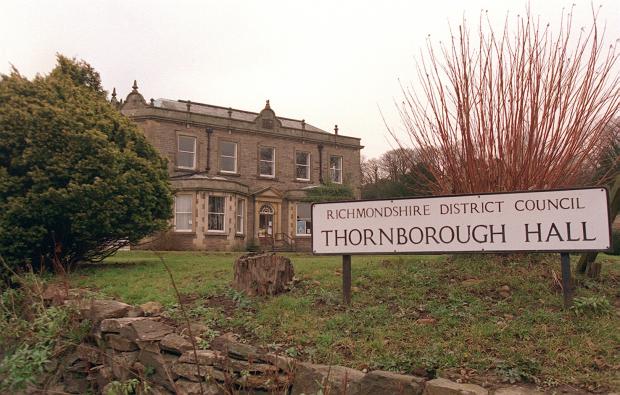
Anne and John retreated after all the drama to Thornborough Hall, which she had inherited from her grandmother after her second husband, Sir Richard Jerningham,  died. The property had originally been willed to John Arthur, but after his death it had reverted to his mother and her husband. The house itself was probably constructed between 1530-1550 and brought up to a standard needed to host the King and his court.

In celebration of her life with her dear husband, John Russell,  Anne had a chapel built in 1556 and attached to the parish church of Chenies in order to memorialize their lives together. The project was actually turned over to their son, Sir Francis, to complete.  It was a real work of art with the commemorative window showing Anne in the robes of a Peeress, with a coronet on long hair and with her feet on a heraldic antelope. For some unknown reason, the inscription on the monument gives her name as Elizabeth (perhaps that was a name she adopted after her daughter died?)


She was loved by many, including her son-in-law, Sir Thomas Cheney, who left her £100 in his will "in consideration of her great friendship and love borne toward me and mine” Sadly she died about the same time he wrote his will and never knew of his gift or his expression of love.

After building the monument honoring his parents, Peter Russell's career soared as an advisor to successive monarchs, which led to a title and great wealth.

But time changes many a landscape, and over the years,  Woburn Abbey became the principal family residence, while the Chermies property became increasingly neglected and eventually fell into disrepair after Anne and John's deaths. 

Woburn Abbey - How's that for some digs?


Friday, February 19, 2016

William Barton, Jr.- the Smoot connection

1634 - 1717
1 William Barton, Jr., 2 Elizabeth Barton , 3 Elizabeth Barton Smoot, 4 Charles Thomas Philpott, 5 David Philpott, 6 Enos Philpott, 7 Rebecca Philpott, 8 Lula Jane Johnson, 9 Charles Thomas Copeland, Sr, 10 Charles Thomas Copeland, Jr.


Although genealogy research continues to uncover more family secrets all the time, there are still many unsolved mysteries lurking “out there”.  One of those mysteries is the confusing relationship between two colonial families - the Smootes (aka Smoot) and the Bartons (aka Batten) who, because there were so many marriages between their children over the years, seemed to have interchangeable surnames.

A number of frustrated researchers have even resorted to drawing up the family trees on paper, while keeping a goodly supply of erasers nearby.  Despite all their efforts, however, the mystery of how the Smoote /Barton family tree has blended into the Barton/Smoote family tree continues to this day.  Adding to the confusion is an over-abundance of common first names like William, Thomas and Elizabeth in just about every generation.  


  The man featured in this post is William Barton, Jr. who was born in Warwickshire, England in 1634 and, as a 20 year old, sailed with his parents and younger siblings to Maryland, a land still primitive and unsettled.


It wasn't an easy journey!  After battling the elements on the sea, they were finally able to put their feet on dry land in Virginia, where they rested and replenished their supplies.  Some time later, they sailed into the Chesapeake Bay and then the Potomac River, where they joined the earlier English settlers who had made some headway in wresting the land away from the Indians and pirates. Their reasons for leaving England and settling in Maryland were probably the same as those who had come before them: freedom from religious persecution and the opportunity to build a better life for their families. 

After sailing into the Potomac, they went ashore on St. Clement's Island which was named for St. Clement, the patron saint of mariners, and eventually became the southern boundary of the newly formed Maryland colony.  A priest, Father Andrew White, who had joined the original group of colonists in 1634, poetically described what he saw as they entered the Potomac:“Never have I beheld a larger or more beautiful river. Fine trees appear, not choked with briers or bushes and undergrowth but growing at intervals as if planted by the hand of men so that you can drive a four horse carriage wherever you choose, through the midst of trees.” 

St. Clement's Island in St. Mary's County, MD was eventually named Blackstone Island in honor of 200 years of ownership by the Blackstone family.  Its rich land encouraged the creation of tobacco producing plantations and provided an abundance of timber ripe for harvesting. 

Upon landing on its shores, the Protestant Bartons learned that Maryland was a place where Christians of all denominations could practice their faith without impediment, and Native Americans - as a separate people - also were granted their inherent rights.  Around the same time, William Penn also instituted a policy of religious freedom in Pennsylvania.

Immigration records indicate that the Smootes had traveled from London to Maryland about 10 years after the first settlers and10 years before the Bartons arrived.  Nothing is written about how they met, but it probably hadn't taken long before  the families connected and - as sometimes happens - formed a deep and lasting friendship. Of course this was before telephone, email, or even Morris Code so it is likely that the two families would make their visits last several days at a time.  If this was indeed the case, it is not surprising that the Barton and Smoote children would also enjoy their time together and build relationships that were to last for centuries.


Finally, after years of playing together and sharing their childish secrets, friendship often deepened into love which led to wedding celebrations for many of those young people  (perhaps because there weren't many other young people to choose from?).  

Four years after making his home on St. Clements Island, 24 year old William Barton, Jr. married a young widow, Anne Smoote Hungerford, who was the mother of a little boy named William Hungerford, Jr.  Even after her first husband's death, her son continued to be absorbed into the Barton and Smoote families and was given the same privileges and benefits as the other children.  

Tragically Anne and William were married only a few years before tragedy struck – first when their five year old daughter died, and then, three years later, both Anne and their baby named William Barton the Third died shortly after his birth.  

At that time, a widower with children often married fairly soon after his wife's death so that the children could be cared for, but despite the lack of living children, William re-married fairly soon after Anne's death.  His second wife's name was Mary, but her last name was never recorded ( I suspect she was a Smoote or Hungerford since there were few other surnames listed in William's extensive will). Several children were born to this union and lived into adulthood, one of whom was also named William in memory of his grandfather and his half-brother who had died at birth.

As a well known planter and mariner, William was one of the settlers who took advantage of the continual need for planters to harvest food and tobacco and mariners to ship their tobacco, lumber, salted fish, and other coveted goods to England in return for skilled workers and carpenters who were begging  for work in England. 
 
Thanks to their proximity to the Potomac River and  Chesapeake Bay, transportation and shipping were fairly easy to organize between the two countries and became the preferred locations to build  new ships and boats.  On the creative side, those builders paid attention to how well the Indian dugout canoes maneuvered in American rivers and on the sea.   Using the shape of those canoes as a model, English boat builders eventually modified their designs and developed new and more useful boats for use in the Bay waters.
 https://www.marinersmuseum.org/sites/micro/cbhf/economy/cbe001b.html

William seemingly was not only ambitious, but must have had a tremendous amount of talent and energy to be able to put his fingers in so many pies. There are a number of official records confirming that besides being a mariner and planter, he acted as Justice of the Peace in both St. Mary's and Charles Counties and became a member of the Governor's Council.

But it seems that he mainly gave his attention to the Provincial Militia, which was not officially recognized by the British military but often called upon to fill in the gaps when war broke out (which was fairly often).

This militia became a well known and respected fighting force and participated in such battles as  "King William's War" (aka The Second Indian War) and" Queen Anne's War" (the second in a series of French and Indian wars). In 1676, he and some of the members of his militia captured four Indians and turned them over to the local authorities.  In recognition of his leadership abilities, William was appointed "Captain of the Foot" (infantry), a title that he carried for the rest of his life.   

Thanks to Captain Barton's organizational skills, he was appointed, in 1684, to be one of those regulating the affairs of the militia in Charles County, Maryland and, in an endeavor to keep the hard-won peace, he - as a Protestant himself -  signed an article assuring Maryland's citizens that the Indians had no plans to kill Protestants.
    In September of 1717,  83 year old William Barton, who was weak and feeble by that time, signed his Will with a mark, although he could read and write.

    Upon reading that Will, one can see that the Bartons and Smootes had continued to experience an incredibly close relationship which had begun years before when a Barton married a Smoote.

    In that Will, which was probated a month later, he left  a number of grants to family members and specifically asked that his grandson, Barton Smoot, be given William's slave, Samm. Barton was directed to treat Samm kindly as, "if the Laws would have permitted, I would have given Samm his freedom". 

    Also Included in the Will was a grant to his granddaughter Elizabeth Smoote Philpott who married another Copeland ancestor, Charles Thomas Philpott, a Revolutionary soldier whose story was told in an earlier post. William died soon after signing his Will.


    St. Clement’s Island lays a half-mile from the mainland in what is Colton’s Point, MD today, at the southern end of St. Mary’s County. Its modest, forested profile spills low on the horizon as you look from the long pier at the St. Clement’s Island-Potomac River Museum. The 40-acre island is now a public park, owned by the Maryland Department of Natural Resources and maintained by the county. 

    Saturday, January 16, 2016

    Yocum - a new Swedish name in a new country


    1641-1760

    1 Peter Jochimsson  2Johann “Jonas” Yocum,  3 John Yocum,  4 Mary Yocum,  5Margaret Bell ,  6 Isaiah Custer,   7 John William Custer,  8 Corda Bell Custer,  9 William Frederick Franklin, 10 Edna Bethel Franklin, 11 Judith Ann Hayward 


    While researching the origins of the “Yocum” name, one discovers that it had its roots in ancient English history; however, 600 years later the name was re-created by Swedish immigrants living in America in the early 1600s. 

    Among those immigrants was Olaf Petersson Stille, a "legend" featured  on this blog several months ago.  Although he hadn't exactly been run out of Sweden, he had often been a thorn in the side of Swedish authorities.  After several run-ins, one of which landed him in jail, he and his wife, Anetje, packed up their 2 children, several close relatives and what little they could take with them and sailed to America. After finally making land in the Delaware River port, they were able to find a place to build their home in "New Sweden", a community established by other Swedish immigrants on the Schuylkill River.  

    As the years passed, most of the children of these settlers became assimilated into American culture and found reason to modify some of their parents' long-held traditions (but not their diet which included pickled herring, Swedish meatballs and limpa bread).  One of those treasured Swedish traditions was to give a newborn child the father's baptismal name as a middle name, followed by "son" or "dotter".  That name often became the child's surname  - making it almost impossible to track a family through the following generations.

    With the marriage of Olaf's daughter, Ella Olafsdottor Stihl, to Peter Jochimsson (spelled with a hard J but pronounced Yocumson), Peter and Ella named their first son Peter Yocum - not Peter Petersson Jochimsson.  And, thus, the new name was born almost by accident in the mid-1600s which is still a family name today.
     
     
    Governor William Penn
    About 60 years after Olaf and Anetje had left their homeland for America, three of their ambitious grandsons decided to settle their families along the eastern bank of the Schuylkill River in what would become Berks County, Pennsylvania.   

    However, before supplicants could take possession of even a small portion of this rich land, they were required to follow the strict rules imposed by William Penn, one of England's best known Quakers who, after seeing his fellow Quakers suffer through deadly persecutions, became convinced that they needed to move to a new home where they could worship in peace. 

    King Charles II
    Fortunately King Charles II, the monarch of England, Scotland and Ireland owed the Penn family a great deal of money, thanks to a loan which had been  made to the monarchy years before.   Finally, after frequent and not always pleasant negotiations, the king agreed - in 1681 - to grant William Penn a huge amount of land in America, thus canceling out the debt.The new colony was named  "Pennsylvania" or “Penn's Wood” and in addition, Penn was able to take possession of what would become Delaware.
     

    This well respected man had a powerful dream to turn his new acquisition into a "holy experiment," meaning that he intended to  give all people  - no matter their race or religion - the opportunity to live there in love and harmony - a Quaker requirement for those following that faith. Having many loose ends to tie up before he actually arrived in America, he appointed his cousin to convince colonists like the Yocums who were already living on the land that they would continue to be governed by their own leaders and laws.


    Even the Indians, who had lived for hundreds of years in that same area, were offered the same deal, and that communication was often aided by the "Yocum boys" who were not only traders, but fluent in the Indian dialects.  The youngest of the three was Johann Jonas "Yocumb", my ancestor, who had started the process to attain 350 acres of rich land  in Amity township.  However, before he could be granted a patent by Governor William Penn, he had to have the boundaries surveyed and approved.  Penn and his heirs were the proprietors of this massive amount of land until the Revolutionary War brought an end to the proprietary period in Pennsylvania.   https://familysearch.org/learn/wiki/en/Pennsylvania_Land_and_Property

    Douglassville Bridge
    Mouns stone house
    Even though more than 200 years have passed since the Yocums worked the land granted to them by William Penn, their heritage lives on and can be seen today.  For instance, when people cross the Douglassville Bridge spanning the Schuylkill River, they can spot an historic stone house built 300 years ago in 1716 by Jonas Yocum's' son-in-law, Mauns Jones, who was trusted to follow his father-in-law's wishes, and had been  named an executor of Jonas' will. 

    Before signing that will, Jonas' son, John, had already preceded him in death. But that didn't stop Jonas from making sure that John's widow was amply provided for.  And unlike many people of that time, he even stated in the will that should his son's widow “give birth to a son",  he too would be granted a portion of the estate. The rest of his estate was to be equitably divided among his children after his death in December of 1760.  He was buried alongside his loved ones in the St. Gabriel Episcopal Church cemetery in Berks County, Pennsylvania.

    Even after Jonas' death, many of his family members continued to live in the area. One of them was Peter Petersson Yocum, who became an Indian trader and continued the family tradition begun by Jonas to act as interpreter for William Penn in the negotiation of  treaties with the Indian tribes.  In addition, he was among a group of settlers who filed a  petition to establish a new town on the west bank of the Delaware which was denied. http://www.wikitree.com/wiki/Jochimsson-1:

    Wednesday, November 11, 2015

    Charles Mabry Copeland - a man who followed his dash

    1871 – 1938
    Family Lineage: 1 Charles Mabry Copeland, 2 Charles Thomas Copeland Sr.,3 Charles Thomas Copeland, Jr.


    Like it or not, each creature born on this planet experiences two unchangeable dates in life - the one that celebrates birth and the other designating the day life as we know it ends. But it is the "dash" between those two dates that makes that person unique.  
     Charles Mabry Copeland was three years old before his home town, Whitesburg, was incorporated as an entity in Carroll County, Georgia.  And his life ended 67 years later in the same tiny town only 40 miles from Atlanta.  While Charlie was growing up, the town had a population of +/- 500 lives and it hasn't grown much since then with the 2010 Census showing 588 lives counted. Although today's young people of Whitesburg are able to take work outside of town - thanks to modern transportation - Charlie had few opportunities to improve his lot other than farm work or some kind of employment on the nearby Chattahoochee River that flows between Whitesburg and neighboring Carrollton.

    One would think that - based on the above statistics - Charlie's dash had little to recommend it to a blog writer devoted to family legends.  That might have been so during the late 1800s, but thanks to computers today and my interest in digging past dry facts and figures,  I soon discovered that both Charlie and the little town of Whitesburg, Georgia lived through very interesting times which were neither dull nor humdrum for either.
     

    For instance, for many generations, the major nucleus of the  Creek Confederacy, a loose grouping of related indigenous people, populated the area, while owning other great tracts of land in what would eventually  become Georgia and Alabama.  But, despite being rich in land, they had little in the way of hard cash to buy essentials from the local trading posts, and made the same major mistake many people make today - they had no resources to back up their growing debt and eventually realized they would never be able to repay them without restructuring" (sound familiar?).  There was only one asset they could liquidate -  some of their lands.  

    Chief Wuilliam McIntosh
    So, in 1802, the Creeks contracted with Chief William McIntosh to negotiate a treaty which would cede some of their land to the United States in exchange for debt forgiveness.  Chief McIntosh was a “half breed” with  blood ties to both the Indian community and  prominent Georgians.  Because of his fluency in both languages, he seemed a good choice to handle these very important negotiations.  

    They certainly didn't expect him to choose his English heritage over his equally strong Indian heritage and sign away all the tribe's remaining lands.  After his deception was discovered, the Creek National Council found him guilty of violating the tribal law protecting communal property and he was sentenced to death.  But one has to wonder whether anyone had ever thought to question William's loyalty to the Creek Confederacy in light of the fact that his  plantation and lifestyle heavily reflected only his English heritage.  History tells us that after the Treaty was signed and the Indian lands in Georgia and Alabama became available, a lottery for large plots of land was established which was open to all.

    While this was going on, John Copeland (a Revolutionary War veteran living in South Carolina) died and - as was the custom - left most of his large estate to his oldest sons. Two of his younger sons, William and George, upon learning that it might be possible to attain rich farm land through the lottery in Georgia, decided to sell their farms and move their families to Georgia.  But before they could put all their plans in place, George died while only in his mid 30s.  Despite the ensuing heartbreak - or maybe because of it - George's family still was able to fulfill his dream by joining William in the migration to Georgia. 

    One of George's sons was Robert Hatten Copeland, a young disabled man known derisively as the "Snakeman”, whose deformities were attributed tohis mother having been terrified by a rattlesnake during her pregnancy.   
    Robert Hatten Copeland

    After settling in Georgia,  Robert's infirmaries did not prevent him from marrying another former South Carolinian, Sarah Minerva, who became the mother of his 9 sons and 1 daughter before her death at age 49, the only blessing being that she didn't live to see her sons march off to war or grieve for the two who never came home.

    A year after Sarah's death, 57 year old Robert married again – this time to a 25 year old, Ann Jane Ferris. They had only four years together before war was declared, and the family was torn apart as Robert's sons joined the Confederacy. 

    But despite the on-going war, Mary Frances was born to Robert and Ann a year after their marriage, followed by a son, Thomas (Tommy) who was born just as the War was drawing to a close.  The last child to be born to the couple was Charles Mabry (aka Charlie) whose father - by that time - was 64 ye and ars old and mother 36.  

    Grave of Thomas Copeland, Age 16
    His childhood didn't last very long.  By the time he was 11 years old, his sister had married and his teenage brother, Tommy, had died suddenly.  Anytime a child dies, there is heartache and loss, but Tommy's death presented additional problems because  now there would be no one strong enough to help frail Robert with the farm's heavy chores, making it abundantly clear that they would have to find other ways to support the family. 
     

    Despite Whitesburg's dismal reputation as a dying town, it seemed for awhile that employment possibilities would open up, thanks to the planned construction of a rail-line running through Whitesburg and connecting Georgia to the Carolinas.  But that plan went awry when workers grading the road outside Whitesburg encountered a huge impenetrable layer of rock, thus literally stopping that construction opportunity in its “tracks”.  
    Whitesburg Train Depot

    Fortunately for the town, a Plan B had been drawn up which would be good for the town, but not necessarily for the Copelands because there would be fewer employment opportunities which they could handle physically. That plan was to build a railroad depot in Whitesburg, making it the first rail center in Carroll County to serve the Central Railroad's Chattanooga Railroad line.  In addition, the town was finally awarded its own post office, which allowed it to become a central hub for mills shipping their product on the Snake River. 
    Thanks to all the activity centering on the railroad, other jobs opened up, one of which was perfect for Robert's family, despite his physical challenges. After some pleading, the Jones Bridge authorities agreed to hire Robert and Charlie to run the ferry across the Chattanooga River while Ann collected tolls.  This was a perfect fit for them, especially because the job included a house which allowed them to stay together for three years until Robert's health had deteriorated so much that Ann and Charlie could no longer take care of him.  After conferences among the family members, Robert's son, William, took Robert to his home and cared for him until his death in 1885.   
     

    Copeland Ferry
    Charlie and his mother must have felt especially blessed to have steady work during the next five years.  And they probably could see no reason why it wouldn't continue into the future.  But the river, which had sustained them, almost destroyed them when it overran its banks and washed away their home and belongings except for a chair, a chest and the family Bible (not much to show for a lifetime but precious to them and worth saving).  There is no record of what eventually happened to the chest and chair.  The Bible, however, was eventually taken to Chicago by Charlie's oldest son who planned to have it re-bound.  But that plan was literally washed away by a another flood - this time involving the Chicago River which flooded and caused great damage to almost everything in its path - including that precious Bible.
     
    Even after the flood, Ann and Charlie were able to continue ferrying people across the
    Chattahoochie and tending the "new" toll-free Jones Bridge. That bridge  stood for less than 20 years before it too fell into such disrepair that it was replaced by another, more modern bridge in 1922 (the remnants of the old bridge still stand where the Chattahoochee River flows roughly east-to-west instead of north and south). 

    Lula and Charlie with 3 sons on Jones Briedge
    Charlie put his own life on hold in order to take took care of his mother until - in 1900 - she died at age 65.   Her death, although certainly sad, opened the door for Charlie to adjust his "dash" and marry Lula Jane Johnson on his 29thbirthday.  There were 4 boys and - finally - a girl born to Charlie and Lula.

     His dash over the next years centered around his family and life on a farm in Carrollton for the first 13 years of their marriage and - finally - back in Whitesburg where that final date (1938) became an official part of his history, but not before he had:

    • Been employed  as the Town Marshall, during which time rumors had started flying that animals with rabies had been seen around town.  He handled that crisis in short order by killing every animal in town - including pets (which didn't make him real popular and cut that job short when he killed the mayor's dog).
    • Become well known to the children in town as he served as janitor in the local school 
    Finally, it became apparent that his dash through life was coming to an end when - at age 67 -  he began to suffer greatly with gall badder complications and died during surgery.  Lula Jane lived 12 more  years until suffering a stroke  in 1950. The graves of many family members discussed in this post can be found in the Whitesburg Methodist Cemetery.

    Copeland graves for Robert, Jane (Ann), Charlie and Lula Jane


    Wednesday, September 30, 2015

    Sir Edward Montagu, Lord Chief Justice of England

    1485 – 1557

    13th Great Grandfather though the Montagu (Montague), Lascalles, Rhodes (Rodes), Ball, Custer, Franklin and Hayward families


    (This legend  may appear far down our genetic chain, but he's still family and we can claim him with pride.  His story is the 61st to be published in my blog, but has been one of the hardest to write so far - not because of a lack of information, but because there is almost too much!  As a result, my challenge has been to give flesh to the person hidden among all those printed facts -  even though it has been more than 400 years since his death!) 

    King Edward I
    Sir Edward Montagu is believed to have been a direct descendant and namesake of King Edward I, who ruled England from 1272 to 1307.  That king, besides having been properly addressed as "Your Royal Highness", was called (probably behind his back)  “Longshanks” because of his great height and “The Hammer of the Scots” because of his response to the Scots' demand for independence.  Despite his heavy involvement in political intrigues and battles before and after he ascended to the throne, he was respected by most of his subjects for the way he embodied the medieval ideal of kingship (i.e. a soldier, administrator and a man of faith).  

    It is also believed that Sir Edward's last name originated on the female side of the family when, before his birth, a prosperous yeoman, Richard Ladde, of Norse descent, adopted  his wife's maiden name of Montagu - a name much better known because of its deep roots into England's royal family,   

    Cambridge University
    By the time Edward, the second son of Thomas Montague and Agnes Dudley, was born, the family had attained wealth and a stellar reputation, which allowed him more opportunities than most people even dreamed of at  that time. So, with an eye toward building on the family reputation and making a name for himself,  young Edward enrolled at Cambridge University in order to study law.
     
    After completing his studies (did they have graduation in the early 1500"s?), Edward built his stellar reputation on not only his well-known family name, but his willingness  to take on and successfully complete any job that was offered - no matter how seemingly menial that job might seem to those of us in the 21st Century, such as:
    • delivering gaols (jails) to the Castle of Northampton,
    • serving as commissary commissioner to the royal forces during the outbreak of an insurrection;
    • overseeing the operation of sewers in Huntingdon and neighboring counties,  
    During his lifetime he was married three times, had 11 children and had inherited Boughton, the family estate, following his older brother's death since the brother had not any sons to carry on the line.

    Finally his attempts to become known for his abilities and devotion to King Henry VIII  (yes, that King Henry) paid off when, in 1537, the king both knighted and appointed him a “sergeant-at-law", a position which allowed him to represent the King in legal matters.  The candidates for this honored post were required to have been barristers for at least 16 years and  the newly appointed sergeant was expected to host a magnificent feast and party to which the king and his queen were invited.  Edward took it several steps further when his lavish party lasted five days and did, indeed, include attendance by the king and whoever his queen was at the time. This was an impressive step in his career  because he was now eligible to be chosen as a judge, and even if that fell through, could continue to plead in court and win fees.

    That 5 day party must have really impressed the King because a short time later, Sir Edward was appointed to serve as a judge on the powerful “Courts of King's Bench and Common Pleas”.  On the surface, it seemed a giant step up in his career; however, the truth was that the Bench had been steadily losing its power over the years because of earlier actions taken, as well as the changing expectations of the public.  It took hard work and dedication, but finally Edward and his co-judges were able to stop that downward momentum by pushing for revolutionary reforms which resulted in less expensive, faster and more versatile types of pleadings.

    With Edward's talent for being in the right place at the right time, he was serving King Henry when the king's anger over the Catholic church's constant criticism of him and his habit of changing wives in often violent ways boiled over in 1539.  The punishment he meted out for their actions was extremely harsh: he closed down all the Roman Catholic churches in his country and took ownership of the religious houses dotting the land, which left these beautiful buildings completely empty.   

    The Boughton House today
    As one of the richest Benedictine monasteries in England, the abbey of  St. Edmunds Bury had long been coveted by the Montagus who owned the adjacent property.  When the opportunity presented itself, Edward was finally able to acquire the “Great Hall of the Monks”, which had been a part of the Abbey and added it to the family estate.  Eventually Edward expanded the manor house on the property which remained in the Montagu family for many generations.
     
    King Henry at age 49
    Sir Edward continued to build his reputation and wealth over the years, even when it sometimes seemed that he had been demoted.  By 1545, he had been transferred from the King's Bench to the lesser (but less onerous) post of Lord Chief Justice of the Common Pleas.  The timing was interesting!  By that time, King Henry's health was declining and he suspected he wouldn't live much longer. He was, therefore, driven to make sure Edward, his 2 year old heir, would be protected and nurtured.  Based on their history together, it's no surprise that Lord Chief Justice Montagu became one of sixteen executors of King Henry's will, as well as the guardian of the future king which, although important, was not his only responsibility.

    One of Sir Edward's other responsibilities as Lord Chief Justice was to lead a commission investigating serious charges brought against the Duke of Norfolk.  In 1547, after the Duke finally admitted to plotting against the crown, he was sentenced to die.  Ironically, on the very day that was to be the Duke's last, 56 year old King Henry VIII died - so of course all sentences were put on hold.  It might seem the Duke had been incredibly lucky, but maybe not. His revised sentence took away both his title and all his property and, even worse, was imprisoned in the Tower of London for many years.
    King Edward VI


    Edward VI, the 9 year old son of Henry VIII, was crowned shortly after his father's death, and became England's first Protestant king. But, because of his youth, he had been placed under the thumb of the Council of Regency, a group of powerful men appointed by his father.  Sir Edward Montagu was also a member of the Council, but soon found himself in opposition to most of their directives.

    The young king never really had a chance to rule.  At age 15 he contracted a terminal disease, which forced him and the Council to dig out the Constitution of the land with a view toward amending the “Devise for the Succession”.  This clause had become more important than ever before because if it was allowed to stand, Edward's oldest Roman Catholic half-sister, Mary, would ascend to the throne after his death.  

    The young, ailing king did not have the experience, stamina or wisdom to break the spell woven over him by the majority of manipulative and powerful men on the Council of Regency.  As a result of constant arm twisting and manipulation, he finally bought into their arguments and agreed to name his cousin, Protestant Lady Jane Grey, as his successor.. Sir Edward vigorously fought against this proposed change until he realized he was in the minority and it was a losing battle.  After fighting the inevitable, he finally bowed to the majority decision and ordered that  "... the King himself was to draw up the legal instrument necessary to devise the crown away from his half-sisters."

    Montagu had obviously lost much of his influence and power in that fight and had found himself being bullied by the Duke of  Northumberland, who called him a traitor and even threatened him with physical violence unless he agreed to the proposed change. Despite having eventually given in, his enemies had gained power and used that power to punish him for what they considered his betrayal of their cause. As punishment, he was fined 1,000 pounds, removed from the Court of Common Pleas, lost some of his property and was imprisoned in the Tower of London for several months.  A footnote in history tells us that after King Edward died in 1553,  Lady Jane ascended to the throne but only ruled for 13 days before she was deposed by the rightful heir, the Roman Catholic Mary.

    No matter what had happened with Lady Jane and Queen Mary, Edward lost heart – and face – during the conflict, and retired to the Boughton Manor where he died in 1557.  Papers found after his death indicate that he felt guilty the rest of his life for caving and signing the Devise for Succession.  Quite a fall for a man of his stature! 

    St. Mary the Virgin, Weekley
    However, despite his belief that he had been a failure and "sold out his values", he was honored even after his death when his casket was carried with great pomp and ceremony in a “hearse of wax” to the cemetery of St. Mary the Virgin, Weekley which had been built a few years before his death but is still standing today. According to the “Dictionary of National Biography, Volumes 1-20,22, his tomb's inscription reads:
    "Farewell, O Edward Montagu father of Justice and master of the Law, you whom sober skill has nourished and wicked knaves of men have feared had lived in the ancient manner, a lover of peace and an unyielding guardian of virtue and scourge of vice... "